May 15, 2026 • Dale Merrick • 9 min reading time • Prices verified June 5, 2026
BG 44K Authenticity Guide: How to Source the Real Formula and Spot Fakes
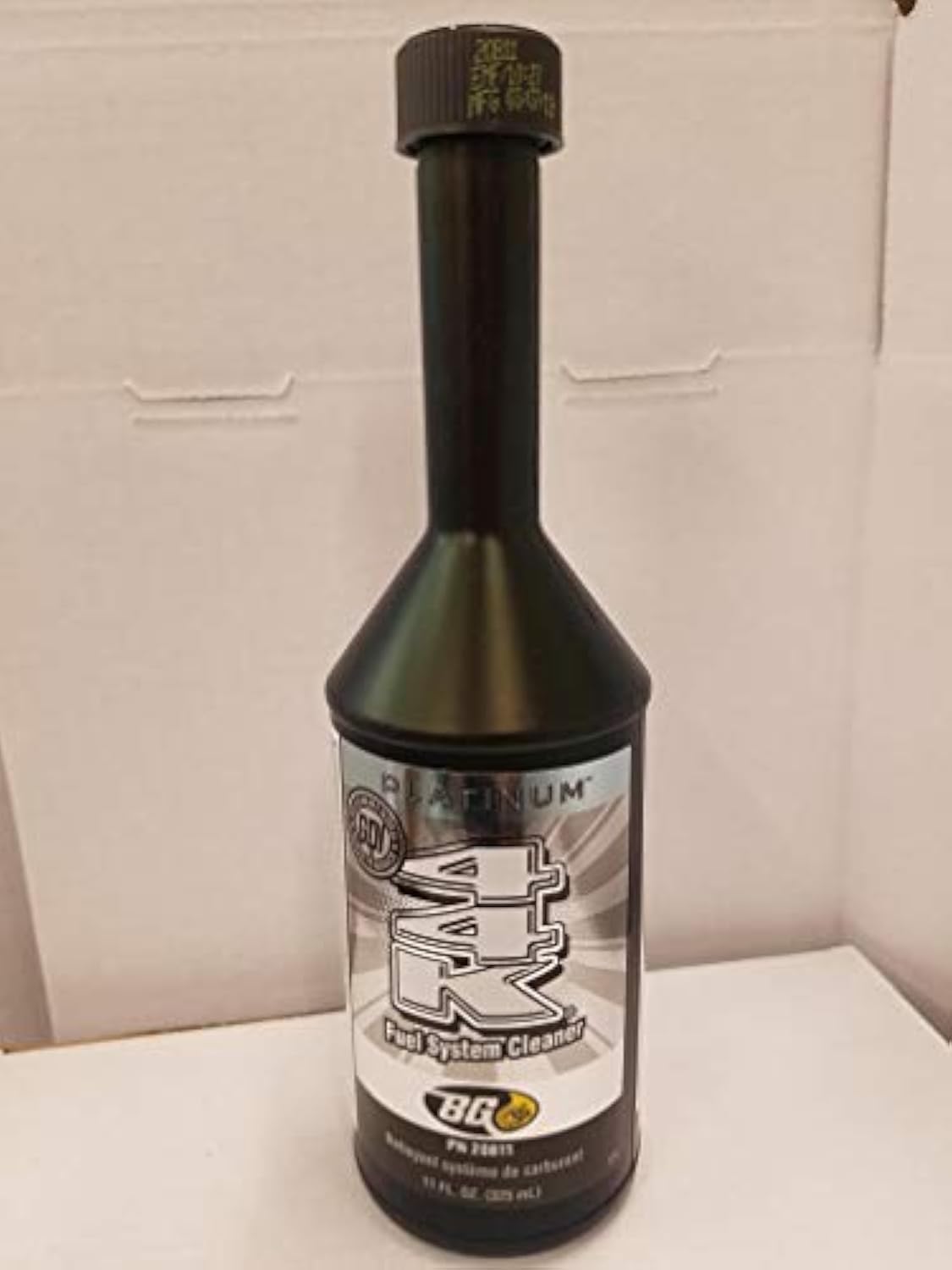
If you’ve spent any time researching fuel system cleaners — the bottled chemical treatments you add to your gas tank to dissolve carbon deposits and keep your fuel injectors spraying cleanly — you’ve almost certainly run into BG 44K. It’s a concentrated cleaner that’s been the go-to recommendation from independent shops and performance-minded enthusiasts for decades. The reason it commands a $60–$80 price point (versus the $9 bottles on the endcap at AutoZone) comes down to its chemistry: specifically a high concentration of PEA, short for polyether amine, the detergent compound that serious fuel system work actually requires. The problem is that a product this well-regarded and this expensive is an obvious counterfeiting target. Across the distribution chain — online marketplaces, gray-market resellers, even some brick-and-mortar shops — fake and diluted BG 44K has been circulating long enough that sourcing authenticity has become its own skill. This guide will show you exactly what that skill looks like.
Why BG 44K Gets Counterfeited (and Why It Matters)
To understand the fake problem, you have to understand what you’re actually paying for with the real product. BG 44K’s active chemistry is built around a high-load PEA concentration — the compound that chemically bonds to and dissolves baked-on carbon deposits inside intake ports, on injector tips, and across combustion chamber surfaces. Popular Mechanics’ analysis of the fuel additive category notes that PEA is the specification that separates cleaning products that do measurable work from those that are essentially premium-branded solvent carriers. BG Products, Inc. doesn’t publish exact PEA percentages on the consumer-facing label (that’s proprietary formulation territory), but the company’s own product specification sheet positions BG 44K explicitly as a high-concentration PEA treatment — not a maintenance-dose product, but a periodic intervention-level cleaner.
That positioning is exactly what makes it worth counterfeiting. A small operation that fills recycled BG 44K cans with diluted or reformulated solvent content can sell product into the distribution chain at or near the legitimate wholesale price and pocket the margin difference. The buyer gets a can that looks right and may even smell roughly similar but delivers none of the active cleaning load. For a daily driver owner treating a rough idle, that’s a wasted $70. For a professional shop running a BG fuel system service as a billed line item on a customer’s vehicle — with their reputation attached to the outcome — it’s a liability.
Motor Age’s technical feature on GDI carbon deposit mitigation makes the point plainly: the concentration of active PEA per treatment is the variable that determines whether a cleaning cycle produces measurable injector flow improvement or just warm feelings. Diluted chemistry doesn’t get there, regardless of what’s printed on the can.
The Authorized Distribution Chain: How Real BG 44K Actually Moves
This is the structural fact that solves most of the authenticity problem before you even inspect a can: BG Products operates a closed, professional-only distribution model. The company sells through a network of authorized BG distributors — independent service equipment and chemical distributors who are contracted, trained, and audited by BG Products directly. Those distributors supply independent shops, dealerships, and fleet accounts. They do not, as a policy matter, supply Amazon, eBay, Walmart, or general retail channels.
BG Products’ authorized distributor policy documentation is unambiguous on this point. If you are buying BG 44K from Amazon, eBay, or any general e-commerce marketplace, you are by definition buying outside the authorized distribution chain. That doesn’t automatically mean the product is fake — some of it is legitimate old-stock or gray-market product that got diverted — but it means you have no chain-of-custody guarantee, no authorized return path, and no recourse if the chemistry is off.
By the numbers — BG 44K sourcing tiers:
| Channel | Authorization Status | Authenticity Risk |
|---|---|---|
| BG authorized distributor (direct account) | Authorized | Lowest |
| Shop supply via authorized distributor | Authorized | Lowest |
| Amazon / eBay / third-party marketplace | Not authorized | Moderate to High |
| Bulk lot / resale platforms | Not authorized | High |
The practical implication for practitioners: if you’re an independent shop owner, the correct move is to establish a direct account with your regional BG distributor. BG Products maintains a distributor locator on their corporate site. For enthusiast buyers without a shop account, calling local independent shops that run BG system services and asking if they’ll sell individual cans is a legitimate approach — many will, and that product came through the right chain.
Physical Authenticity Markers: What to Check on the Can
Assuming you’re sourcing through a channel where counterfeit risk exists — or you’ve received a shipment and want to verify before putting it in a customer’s vehicle — here are the physical indicators that matter.
Can construction and labeling. Legitimate BG 44K cans are manufactured to a consistent spec. The label graphics, font weight, and color saturation on authentic cans are sharper and more consistent than on counterfeits, which often show slightly washed-out colors or label registration that’s slightly off-center. This is hard to describe in the abstract but becomes obvious when you hold a known-good can next to a suspect one. If you’re a shop owner ordering in volume, keep one verified can as a physical reference standard.
Lot codes and date codes. Every legitimate BG 44K can carries a stamped lot code and production date. Counterfeits either omit these entirely, stamp obviously generic codes, or reproduce the same code across multiple cans in a batch (which is a tell — legitimate production lots encode specific date and line information that varies). BG Products’ product documentation confirms that lot traceability is a standard quality-control element of their manufacturing. If every can in a case shows identical stamping, that’s a red flag.
The BG Products verification line. This is the most direct tool available: BG Products operates a customer and distributor support line specifically for product authentication questions. If you have a can in hand and the sourcing story is unclear, calling BG directly with the lot code is the right move. Underhood Service’s coverage of the professional chemical service segment notes that BG’s distributor support infrastructure is one of the company’s genuine competitive differentiators — they have the capacity to field these questions.
Fill weight and seal integrity. Authentic cans are filled to spec — the product weight is consistent. Counterfeits are sometimes underfilled (reducing cost of the fill material) or show tampered crimp seals where old cans were reopened and refilled. A can that rattles, shows a loose or re-crimped top, or feels light relative to a reference can is suspect.
Price as a signal. As of mid-2026, legitimate BG 44K through authorized channels prices in the $60–$80 range per 11-oz can at the shop-supply level. Marketplace listings substantially below $45 should trigger skepticism — the margin math for selling authentic product that cheaply doesn’t work unless someone in the chain is absorbing a significant loss, which is not how gray-market economics operate.
Red Flags by Sourcing Scenario
Different buying situations carry different risk profiles. Here’s how to read each one:
Amazon “sold by BG Products” vs. third-party sellers. As of 2026, BG Products does not operate an authorized Amazon storefront. Any Amazon listing — including those that display a “BG Products” seller name — is operating outside the authorized distribution model. Aggregated buyer reviews on marketplace platforms consistently surface complaints about suspect labeling and inconsistent results that don’t match the product’s reputation; whether that reflects diluted product or simply misuse is impossible to determine from the outside, but the pattern is documented.
Brick-and-mortar auto parts chains. National retail chains (AutoZone, O’Reilly, Advance) do not carry BG 44K as a standard shelf item. If you see it on a shelf at a general auto parts retailer, the sourcing chain deserves scrutiny — ask the store manager how it came in.
Shop overstock or liquidation lots. Shops sometimes sell excess stock, and those cans may be entirely legitimate. The right question to ask is whether the selling shop is an active BG account holder. If they can confirm they ordered through a BG distributor and show you the original case packaging with distributor labeling, that’s a reasonable chain of custody.
eBay bulk listings. Cases of BG 44K appearing in bulk on eBay from unfamiliar sellers are the highest-risk sourcing scenario. SAE’s additive interaction standards documentation underscores that chemical consistency lot-to-lot matters for predictable performance outcomes — buying an unknown lot from an unknown chain breaks that consistency guarantee entirely.
The Decision Framework: If X, Then Y
If you’re a shop owner or fleet service operator setting up a BG program, the decision is straightforward: establish a direct distributor account. The per-can cost through authorized channels is what it is, and the authenticity guarantee is worth the full-price commitment. BG distributors also typically offer volume pricing and consignment inventory arrangements for active accounts — the economics improve at scale.
If you’re an enthusiast buyer without a shop account, the cleanest path is buying directly from an independent shop that carries BG Products and will sell you individual cans — the product came through the right chain. The second-best option is calling your regional BG distributor directly; some will accommodate direct consumer sales, and all can refer you to a local authorized shop account.
If you’ve already purchased from a marketplace source and want to assess what you have: check the lot code against the physical markers above, note the fill weight, and call BG Products’ support line with the lot number. If anything looks off, the $70 cost of discarding a suspect can is much cheaper than the cost of a shop reputation problem or a customer’s injector service that didn’t perform.
The underlying principle here is the same one that applies across precision fuel system chemistry: the product is only as good as the chain of custody behind it. BG 44K’s chemistry is legitimately differentiated — per BG’s own specification documentation and the pattern across professional shop operators who rely on it for billed system services. That differentiation is only available when the can in your hand is the real formula. Source accordingly.