May 4, 2026 • Dale Merrick • 10 min reading time • Prices verified June 5, 2026
Sea Foam vs. Techron vs. Lucas: The Three Bottles Everyone Asks About, Honestly Compared

If you have ever stood in the auto-parts store aisle staring at three bottles — one red, one blue, one yellow — and thought “they all say they clean my fuel system, so what’s actually different?”, you are not alone. That confusion is the number-one question every counter tech fields on a Saturday morning. Fuel additives are liquid chemistry you pour into your gas tank — or sometimes your crankcase — to clean fuel injectors, remove carbon buildup on intake valves, and restore fuel economy that quietly erodes over tens of thousands of miles. The three bottles that dominate that conversation are Sea Foam Motor Treatment, Chevron Techron Concentrate Plus, and Lucas Fuel Treatment. They are genuinely different products built on different chemistry for different jobs, and the right choice depends entirely on what you are trying to fix. This article walks through what is in each one, what the published data and owner experience actually support, and ends with a plain decision rule so you can stop guessing.
| EDITOR'S PICKChevron 67740-CASE Techron Conc… | Mid-tierLucas Oil 10003 Fuel Treatment… | Budget pick[Lucas Oil Deep Clean Fuel Syste…](https://www.amazon.com/dp/B0FNNFZRFR?tag=greenflower20-20) | |
|---|---|---|---|
| Volume | 12 oz | 32 oz | 5.25 oz |
| Pack qty | 6 | 1 | 1 |
| Concentrate | ✓ | — | — |
| Use type | Fuel system | Fuel treatment | Deep clean |
| Brand family | Chevron | Lucas | Lucas |
| Price | $39.98 | $9.89 | $5.79 |
| See on Amazon → | See on Amazon → | See on Amazon → |
The Chemistry Behind the Marketing
Most fuel additive marketing leans hard on vague language — “cleans,” “protects,” “restores power.” The specification that actually matters is whether the product contains PEA (polyether amine), a detergent molecule that engine testing research consistently identifies as the most effective class of compound for dissolving and suspending carbon deposits inside injectors and on intake valves. SAE Technical Paper 2016-01-2322, “Intake Valve Deposit Formation in Direct Injection Spark Ignition Engines,” published by SAE International, identifies deposit-control additives in the PEA family as the benchmark for effectiveness in modern port and direct-injection engines. That paper is available through the SAE International technical paper archive at sae.org.
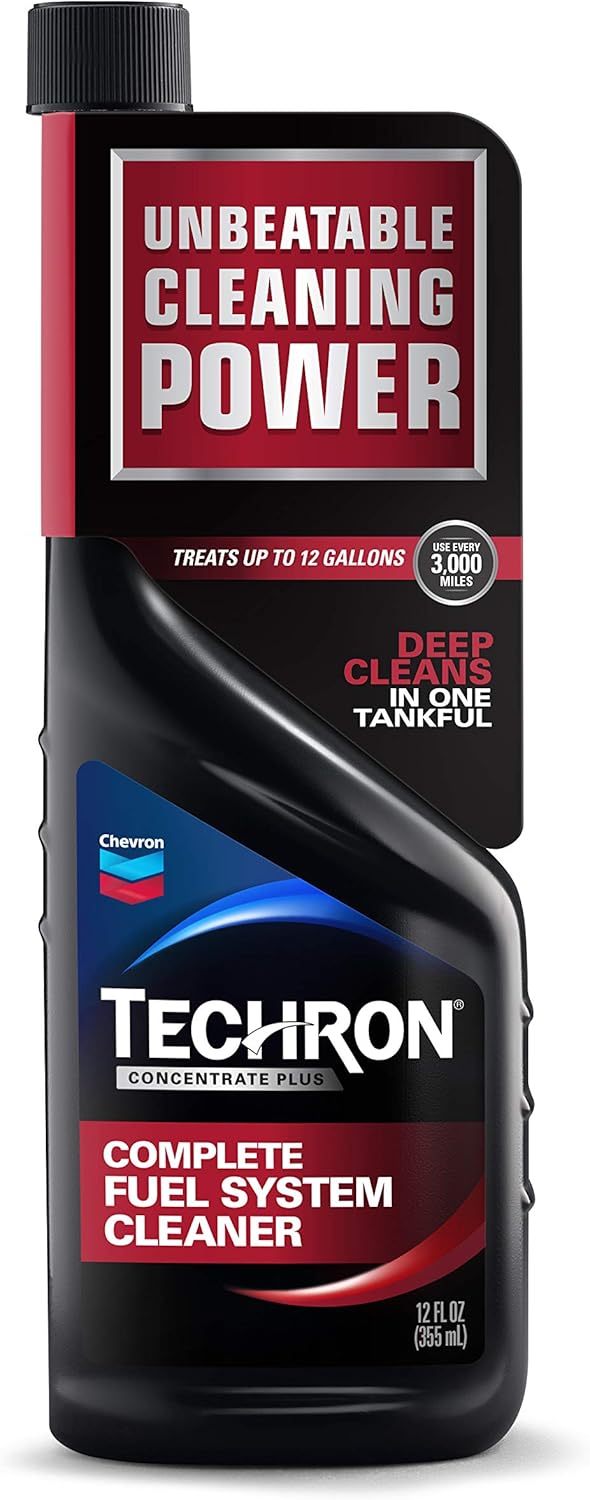
Chevron Techron Concentrate Plus is the PEA standard-bearer in this group. Chevron’s published product documentation — the Techron Concentrate Plus product data sheet, available directly from Chevron Corporation — identifies PEA as the active detergent technology. Chevron is, notably, the company that developed PEA chemistry for fuel system use. The Top Tier Gasoline Program, the industry specification that defines minimum detergency standards now endorsed by most major automakers, was built around PEA-class chemistry. Car and Driver, in a fuel additive feature overview, specifically names Techron as the product with the clearest documented chemistry pedigree in the consumer bottle segment.
Sea Foam Motor Treatment is a different animal entirely. Sea Foam’s Safety Data Sheet and product usage guide — both published by Sea Foam Sales Company and available through their official product documentation — identify its active ingredients as pale oil, naphtha, and isopropyl alcohol, a petroleum-distillate blend rather than a synthesized PEA detergent. That is not a knock; it is a design choice for a different job. The naphtha fraction is a light solvent that dissolves gum and varnish deposits — the sticky residue that clogs injector needle seats and gums up carburetors — and the isopropyl alcohol helps carry moisture out of the fuel system. Sea Foam also has an explicitly documented secondary use in the crankcase: a measured dose in the engine oil before an oil change loosens sludge. Techron cannot do that. The trade-off is that solvent chemistry is generally less aggressive on hard carbon deposits than PEA detergent chemistry.
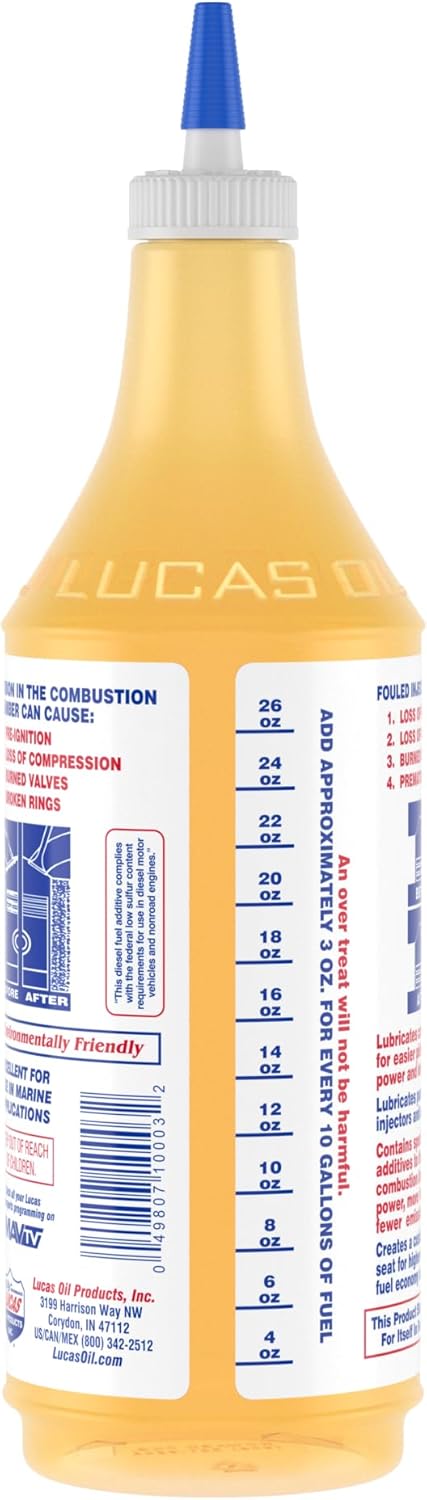
Lucas Fuel Treatment sits in a third lane. Lucas Oil Products’ published specification sheet describes the formulation as a petroleum-based lubricant and upper-cylinder lubricant treatment with cleaning agents. The emphasis is lubrication and fuel system protection — injector needle lubrication, upper-cylinder lubrication in engines running low-sulfur fuel, and fuel stabilization. Popular Mechanics, in its “Best Fuel Injector Cleaners” buying guide, notes that Lucas is particularly well-regarded in the diesel and older carbureted engine segment where upper-cylinder lubrication is a genuine concern. It is not a PEA detergent, and it is not marketed as one.
By the Numbers: Quick Reference
| Product | Active Chemistry | Bottle Size | Typical Street Price (May 2026) | Per-Treatment Cost | Primary Job |
|---|---|---|---|---|---|
| Chevron Techron Concentrate Plus | PEA detergent | 20 oz | $16–$20 | $16–$20 / treatment | Injector and intake valve deposit removal |
| Sea Foam Motor Treatment | Petroleum solvents (naphtha, IPA) | 16 oz | $9–$13 | $9–$13 / treatment | Varnish and gum dissolving; crankcase sludge |
| Lucas Fuel Treatment | Petroleum lubricant + cleaning agents | 5.25 oz | $8–$11 | $2–$4 / treatment at label rate | Upper-cylinder lubrication; fuel stabilization |
Street prices based on aggregated retailer data across AutoZone, O’Reilly, and Amazon, May 2026.
Where Each One Actually Wins
Techron: The Right Tool for Carbon and Injector Deposits
If you have a modern port-fuel injected or direct-injection gasoline engine — essentially any gas engine built after 2005, and especially turbocharged GDI platforms — and your concern is injector deposit buildup or intake valve carbon accumulation on the port side, Techron Concentrate Plus is the documented answer in the pour-in bottle category. PEA is what engine manufacturer deposit-control test protocols measure against, and Techron’s concentration of it is among the highest available in the retail segment.
The honest caveat: even high-PEA additives added to the fuel tank cannot reach GDI intake valves directly, because in a GDI engine the fuel never touches those valves — fuel is injected directly into the combustion chamber, bypassing the intake tract entirely. For intake valve carbon on GDI engines, walnut blasting or an intake cleaner applied through the intake manifold is the only reliable fix. What Techron can do on a GDI platform is keep the fuel injectors themselves clean and protect the combustion chamber. On port-injected engines, it earns its reputation fully.
Operators running Techron on a 5,000–10,000 mile interval report consistent maintenance of fuel economy and throttle response. Popular Mechanics’ “Best Fuel Injector Cleaners” buying guide identifies Techron as the reference product for injector cleaning in the pour-in segment, and Car and Driver’s fuel additive feature overview reaches the same conclusion. The per-treatment cost of $16–$20 is higher than the other two products in this comparison, but it is a fraction of a shop injector cleaning service, which typically runs $60–$150 at an independent shop.
Chevron
$39.98
In stock on Amazon
Check price on AmazonSea Foam: The Versatile Solvent for Older Engines and Gum Issues
Sea Foam’s sweet spot is any situation where varnish and gum — not hard carbon — are the enemy. That means carbureted engines, fuel-injected engines that have sat with old fuel, engines with sticky injector pintle deposits from ethanol-blended fuel degradation, or any situation where a light crankcase flush before an oil change is desirable.
The crankcase application is genuinely unique in this comparison group. Per Sea Foam Sales Company’s product usage guide, adding approximately 1 to 1.5 ounces per quart of oil capacity roughly 100 to 300 miles before an oil change helps suspend sludge so it drains out with the old oil. No other product in this comparison can make that claim safely.
Sea Foam is also a legitimate fuel stabilizer for seasonal storage, where its petroleum-distillate base helps prevent varnishing in sitting fuel. On a modern GDI engine with primarily hard carbon concerns, it is less targeted than Techron — but for a carburetor rebuild candidate, a lawn equipment engine, or a vehicle returning from extended storage, Sea Foam is arguably the more practical choice. At $9–$13 per bottle it sits in the middle of the price range, making it a reasonable general-purpose solvent tool for a shop bay that sees a wide variety of engine ages and conditions.
Lucas
$9.89
In stock on Amazon
Check price on AmazonLucas: The Low-Cost Maintenance Lubricant for Diesels and Older Gas Engines
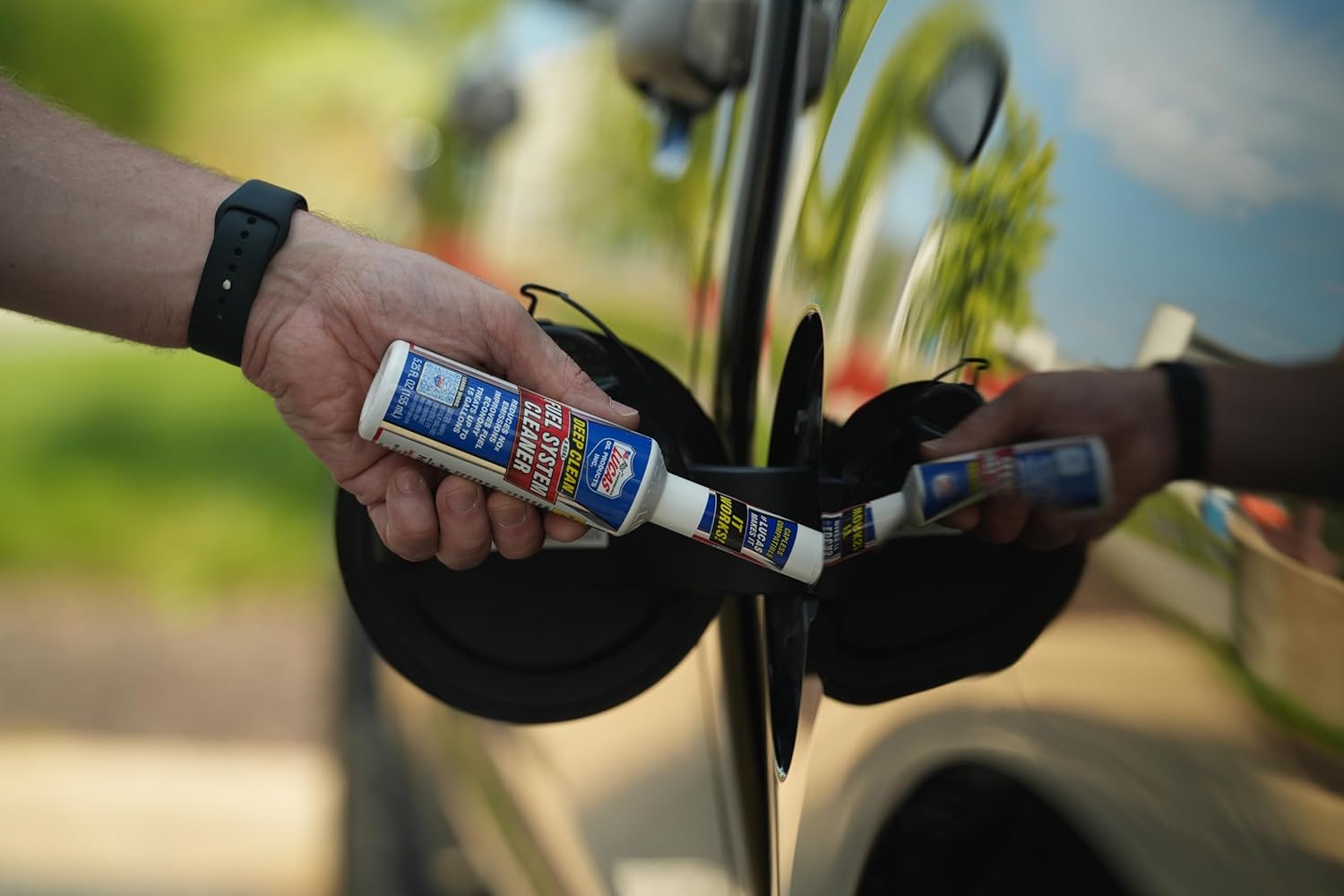
Lucas Fuel Treatment is often mischaracterized as a cleaner in the same class as Techron. It is not — and it does not need to be. Its published specification from Lucas Oil Products is about upper-cylinder lubrication and fuel system protection, and at $2–$4 per treatment at label dose rates, it is a viable regular-interval maintenance product for engines where fuel lubricity matters.
That list includes diesel engines, where fuel lubricity is a real specification and not a marketing concept; older gasoline engines that predate modern Top Tier fuel standards; high-mileage engines where injector needle wear is a concern; and marine or off-road applications running non-retail fuel blends. Lucas has a loyal following in the diesel pickup community for reasons grounded in its actual chemistry, as noted in Popular Mechanics’ “Best Fuel Injector Cleaners” buying guide coverage of the diesel additive segment.
Where Lucas underperforms relative to its marketing: it is not a substitute for a PEA cleaner on a GDI engine with carbon concerns, and it should not be used instead of Techron on a modern injected gasoline engine if the goal is deposit removal. The two products address different failure modes. Using a lubricant in place of a detergent to address carbon is the wrong tool for the job, regardless of cost.
Lucas 10669
$5.79
In stock on Amazon
Check price on AmazonThe Honest Trade-Off Matrix
The real question is never “which one is best” — it is “best for what.” Here is the decision frame distilled from the chemistry and the published source material.
Modern gasoline direct-injection or port-injected engine with injector fouling or deposit buildup: Techron Concentrate Plus on a periodic interval. Chevron’s published product guidance recommends a maintenance dose every 3,000 to 5,000 miles or a corrective dose every 15,000 miles. The PEA concentration is the highest in this group and is the chemistry that Top Tier detergency standards are built around.
Engine that has been sitting, runs a carburetor, shows symptoms of gummed injectors from old fuel, or requires a crankcase flush before an oil change: Sea Foam is the correct call. The solvent package handles varnish and gum that PEA is not specifically designed to target, and the crankcase application — documented in Sea Foam Sales Company’s own product usage guide — is a legitimate tool no other pour-in bottle in this comparison offers.
Diesel truck, high-mileage older gasoline engine, marine equipment, or any platform where fuel lubricity and upper-cylinder protection are genuine concerns: Lucas at its label dose rate is a cost-effective, well-documented maintenance product. At $2–$4 per treatment it is also viable as a regular-interval additive in a way that Techron at $16–$20 is not.
Fouled GDI injector set on a high-mileage engine: None of these three bottles alone is the right answer. A professional ultrasonic injector cleaning service or an in-vehicle BG system service using a professional-grade high-concentration PEA treatment is the corrective procedure. Pour-in products in this tier are maintenance and mild-correction tools, not injector rebuilding chemistry.
A Word on Sourcing
All three of these products are widely counterfeited or diluted in third-party marketplace channels. Chevron Techron in particular has documented counterfeit issues on secondary marketplace listings. For any of these three bottles, purchasing from AutoZone, O’Reilly, Advance Auto Parts, a Walmart auto section, or a verified Amazon fulfillment listing sold directly by the manufacturer or a named distributor — not a third-party seller with no transaction history — is the reliable sourcing path. The price difference between a legitimate bottle and a counterfeited or diluted one is often zero. The fraud is in the chemistry, not the label.
The Decision Rule
Modern gasoline engine, deposit concerns → Chevron Techron Concentrate Plus, periodic interval. Old engine, carburetor, sitting vehicle, or crankcase flush needed → Sea Foam Motor Treatment, application-specific dosing. Diesel, high-mileage gasoline, or marine application where lubricity is the issue → Lucas Fuel Treatment, regular maintenance dose. Fouled GDI injector set → Professional ultrasonic cleaning or in-vehicle BG system service; no pour-in bottle substitutes.
Sea Foam, Techron, and Lucas are all honest products with documented chemistry and real-world applications where each one is the correct answer. They are simply not the same product, and choosing among them correctly requires knowing which failure mode you are addressing. Now you do.