April 30, 2026 • Dale Merrick • 9 min reading time • Prices verified June 5, 2026
Walnut Blasting Machines for GDI Intake Valves: Which Rig Is Worth the Shop Investment
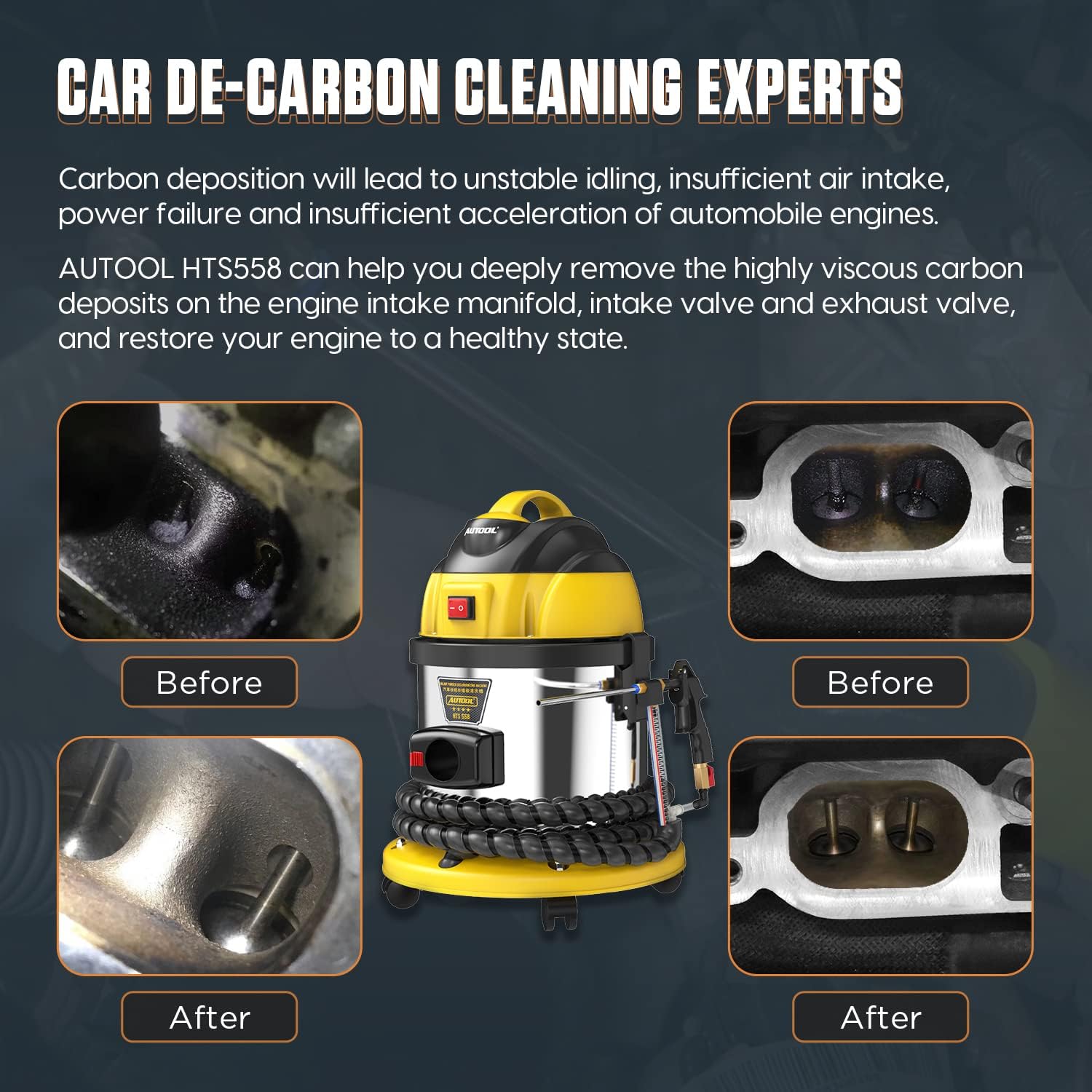
If you’ve ever pulled the intake manifold off a high-mileage turbocharged BMW, Audi, or Ford EcoBoost and found the intake valves coated in a hard, black crust that looks like charred peanut butter — that’s carbon buildup, and it’s the defining service challenge of the GDI era. GDI stands for Gasoline Direct Injection, a fueling design where fuel sprays directly into the cylinder rather than past the intake valve. That means the valve never gets a detergent bath from fuel passing over it, so oil vapors from the crankcase ventilation system bake onto the hot metal over time. The buildup restricts airflow, hurts power, and — left long enough — can cause misfires and cold-start stumbles. Walnut blasting is the professional solution: crushed walnut shells, propelled by compressed air, strip the deposits without scratching the valve or the port. This guide is written for the shop owner or technician who is seriously considering buying a setup and wants to know which equipment actually earns its keep.
Why Walnut Blasting Is the Procedure Worth Owning Equipment For
The two competing DIY-adjacent methods — chemical soak (spraying top-engine cleaner into the port with valves open) and manual scraping — work to different degrees, but neither scales well in a shop setting. Underhood Service’s coverage of GDI intake valve service notes that chemical soak can soften light to moderate deposits but struggles with the hardened, baked-on carbon that accumulates past roughly 60,000–80,000 miles on high-oil-consumption engines like the early BMW N54 or Audi 2.0T EA888. Manual scraping with picks is effective but brutally slow — technicians in long-run shop reports routinely describe 2–3 hours of labor to clean eight valves by hand versus 45–75 minutes with a walnut blast kit.
Walnut blasting’s physics are well-matched to the problem. The shell media is hard enough to fracture carbon deposits on impact but soft enough that it won’t score aluminum ports or leave ferrous contamination the way glass bead or sand media would. SAE Technical Paper 2016-01-0691 on port fuel and direct injection deposit mechanisms confirms the hardened, layered structure of GDI intake valve deposits — exactly the profile that abrasive media handles more effectively than chemistry alone.
The procedural requirement that keeps this a shop-level job rather than a driveway fix is vacuum extraction: the spent media and loosened carbon have to be pulled out of the port before the engine is reassembled. This is where equipment selection actually matters.
The Equipment Decision: Three Tiers Worth Understanding
Entry-Level Kit: Adapter + Shop Vac Combo (~$150–$400)
The lowest cost of entry is a manifold-port adapter set paired with a modified shop vacuum for simultaneous blast-and-extract. These kits — sold by suppliers like OTC Tools and several import-brand distributors — use a nozzle that introduces the walnut shell media through the center while the vacuum pulls the surrounding air (and debris) back out through an annular gap around the nozzle. The operator rotates cylinder by cylinder with valves closed on the intake stroke (verified with a bore scope or by feel on a wrench).
Published specs on entry kits typically list media consumption around 1–2 lbs per cylinder on heavy deposits, with total kit weight under 5 lbs. Operators in aggregated shop forums (cited by Motor Age’s GDI service feature) report that extraction efficiency on shop-vac combos is adequate but not excellent — expect some media retention in the port, requiring a secondary vacuum pass and bore scope verification before reassembly.
Trade-off framing: If your shop currently does two or three GDI carbon cleans per month, entry kit math is favorable. The consumable cost is modest (crushed walnut shell media runs approximately $15–$25 per 5-lb bag at industrial supply level as of mid-2026), the learning curve is low, and the equipment amortizes fast. The limitation is throughput: these kits don’t reduce the job time enough to meaningfully change your labor rate structure on high-volume accounts.
Mid-Range Dedicated Blast Cabinet Adapter (~$400–$900)
This tier bridges the shop-vac combo and full professional equipment. Companies like Lisle Corporation and several European tool importers offer dedicated walnut blast adapters designed to interface with a small pressure-pot blast cabinet — the kind a shop likely already owns for brake drum cleaning or parts washing. The adapter creates a closed-loop circuit: media blasts in, vacuum pulls out, and spent media is collected in a canister for disposal (walnut shell is not effectively reused after one pass through heavy carbon deposits; the media fractures and absorbs contamination).
Operators using Lisle-style adapters consistently report improved extraction reliability versus basic shop-vac kits, with bore-scope re-inspection times shortened because the port presents cleaner on first pass. The capital cost is spread across equipment the shop may already have, which is a genuine advantage.
Trade-off framing: If your shop runs 6+ GDI carbon cleans per month and you already own a pressure-pot blast cabinet, this is the decision-efficient tier. You’re buying an adapter, not a whole system, so the per-job amortization is aggressive.
Professional Dedicated Walnut Blast System (~$900–$2,500+)
At the top of the range sit purpose-built systems — the category anchored by the Draper Expert units popular in European workshops, the BG Products Induction Service equipment, and several German-import systems distributed through OTC and Snap-on channels. These integrate a calibrated pressure pot, a filtered vacuum extraction circuit, media delivery controls, and port-specific adapter sets for the highest-volume GDI applications (VAG 2.0T, BMW N20/B46/B58, Ford 2.3 EcoBoost, GM LTG).
The engineering justification for the price premium is cycle time and consistency. Published specs on dedicated systems rate media delivery pressure at 40–90 PSI adjustable — relevant because lighter deposit loads on higher-maintenance engines benefit from lower pressure to avoid valve stem seal contact, while heavy fleet-neglect cases may need higher pressure to fracture hard deposits efficiently. Motor Age’s equipment coverage notes that adjustable pressure separates professional units from entry kits in a way that matters for protecting late-model variable valve timing components adjacent to the port.
Extraction is typically a dedicated filtered vacuum circuit, not a repurposed shop vac, which means cleaner post-blast ports and shorter bore-scope verification time. Shops running BG Products system services note that the BG Induction Service package (equipment plus chemistry pre-treat and post-treatment protocols) can be marketed as a named branded service with a suggested retail in the $250–$400 range per vehicle, depending on market. That pricing context is the real argument for the equipment cost.
By the Numbers
| Tier | Equipment Cost | Approx. Job Time (8-valve engine) | Consumables per Job | Suggested Retail (per vehicle) |
|---|---|---|---|---|
| Entry shop-vac kit | $150–$400 | 90–120 min | ~$8–$15 media | $180–$280 |
| Mid-range cabinet adapter | $400–$900 | 60–90 min | ~$8–$15 media | $200–$320 |
| Professional dedicated system | $900–$2,500 | 45–70 min | ~$10–$20 media + chemistry | $250–$400+ |
Labor estimates reflect aggregated technician reports from industry coverage; individual results vary by engine configuration and deposit severity.
What GDI Carbon Cleaning Actually Sells For in 2026
Popular Mechanics’ coverage of GDI carbon buildup cites the growing mainstream awareness of the problem — essentially every turbocharged GDI engine built after 2010 will need this service somewhere between 50,000 and 100,000 miles depending on oil quality, PCV system condition, and driving cycle. That’s a large and growing service population.
Independent shops in competitive metro markets are billing this service in the $300–$500 range for a four-cylinder and $450–$700 for a six-cylinder with manifold removal, bore-scope inspection, and media blast included. European specialist shops running OEM-adjacent protocols on BMW and Audi platforms command the higher end. Diesel fleet operations, by contrast, are generally not your walnut blast market — diesel GDI architecture is different enough that carbon cleaning protocols diverge sharply. Your buyer is almost always a gasoline direct-injection engine.
The margin math favors shops that can pair walnut blasting with a scheduled-interval pitch: “Every 40,000–60,000 miles on your [N20 / EA888 / EcoBoost], plan on this service.” Underhood Service’s editorial on GDI service profitability specifically calls out interval-based marketing as the mechanism that converts a one-time diagnostic find into a recurring revenue line.
Decision Rules: If X, Then Y
If your shop does fewer than 3 GDI carbon cleans per month: Start with an entry-level shop-vac kit in the $150–$300 range. Build technician proficiency, gather before/after bore-scope images for your customer-facing marketing, and revisit equipment tier in 12 months. The entry kit earns its cost back inside the first job; the risk of over-investing early is real.
If you’re averaging 5+ GDI jobs per month and already own a pressure-pot blast cabinet: The mid-range adapter tier is the clear call. You’re adding capability to existing infrastructure, not buying a whole system, and the per-job time reduction starts improving your labor efficiency almost immediately.
If you’re positioning your shop as a European-car specialist or high-performance GDI service destination: Invest in a professional dedicated system. The adjustable pressure controls matter for protecting BMW and Audi variable valve timing hardware. The BG-branded or OEM-appearance service protocol gives you a story to tell the customer. The time savings on a 60,000-mile B58 manifest removal pays for itself across a full season’s volume.
If you’re evaluating this as a fleet service addition: Pause. Walnut blasting’s ROI is in passenger-car GDI engines. If your fleet accounts run mostly diesel, the equipment investment doesn’t map cleanly to that revenue stream. Validate your specific fleet mix before committing.
One final note on sourcing: adapter sets and media are widely available through OTC, Snap-on, and direct from Lisle, but bore-scope quality matters as much as the blast equipment itself. A bore scope that can image the full valve head and seat after cleaning is the quality-control step that protects you from reassembling over residual media — and it’s the documentation step that justifies your retail price to a skeptical customer. Budget $200–$500 for a capable flexible bore scope as part of your total GDI service equipment investment, not as an optional add-on.
The walnut blast service category is one of the cleaner equipment investment decisions in independent shop tooling right now: the problem is universal to a growing vehicle population, the chemistry alternative doesn’t fully close the gap on heavy deposits, and the retail price point creates real margin. The equipment decision is mostly about matching rig capability to your current and projected volume — the decision rules above are designed to make that call straightforward.